
Chapter 2: The Locked Room
A computer no one could touch, a lift that never stopped, and the Z80 chip.

This is the part of the story where childhood ends, education begins to matter, and the gap between intention and reality starts to show.
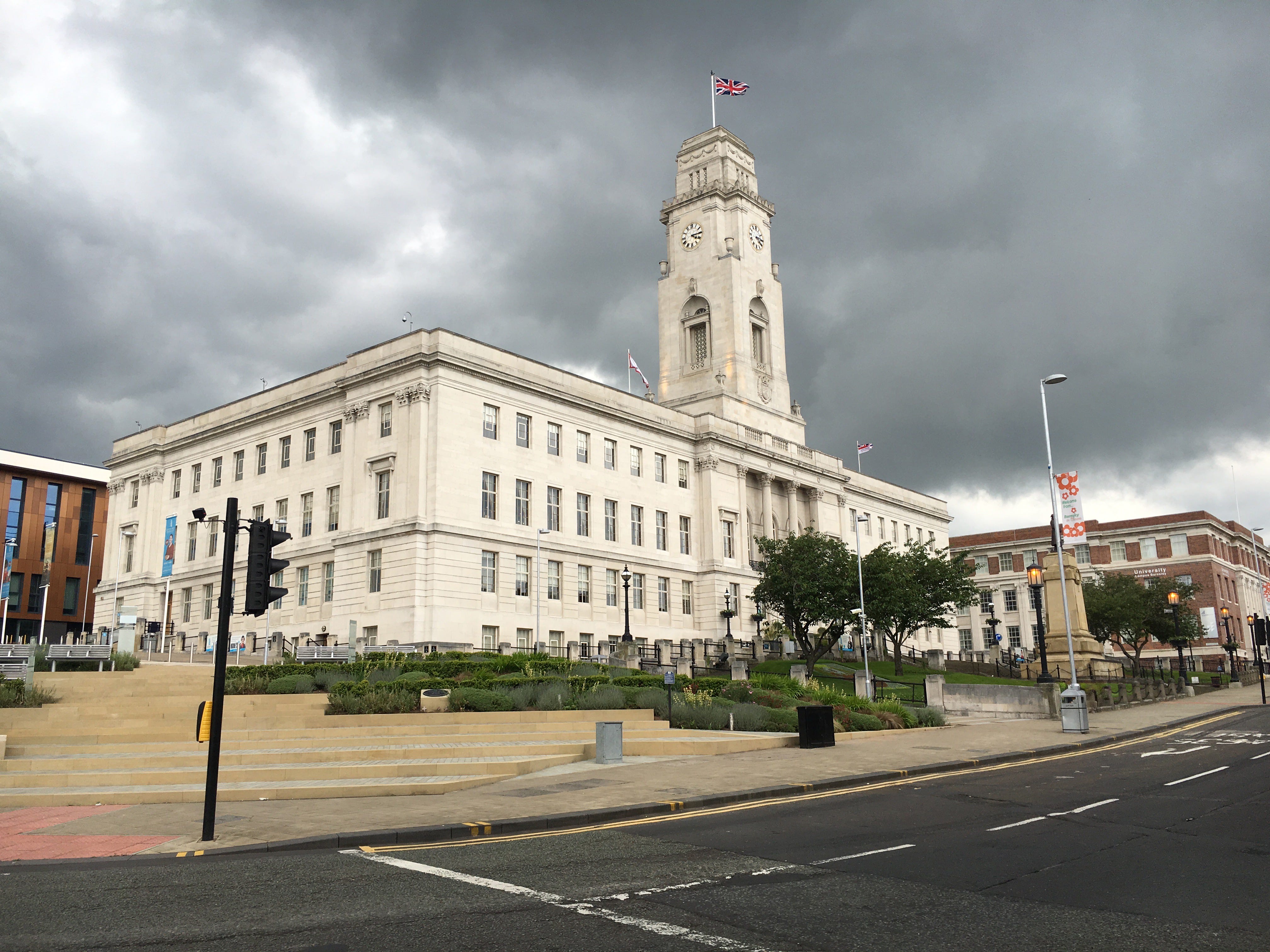
During the last two years at St. Helen’s, we had the option to attend Barnsley Technical College one morning a week. It was meant to give us a head start in a trade. I chose Electrical Engineering. The other option was Car Mechanics, which did not interest me. Every Wednesday morning, we would hop on a bus and head into town to learn how to wire a two-way switch or calculate resistance using Ohm’s Law. The shop smelled like solder and dust. The instructors, in their brown shop coats, were the kind who did not waste words, and you had to keep up or get left behind. I enjoyed it tremendously.
V = I x R
In my fifth year, a third choice was added to the mix: a computer course. The school had finally gotten its hands on a machine, but it was kept in a locked room, strictly out of bounds unless you were enrolled. To qualify, you had to be in the top maths class. I cleared that hurdle, but the school then required at least five students for the course to run. Out of a year of around 120 kids, including twenty-odd in the top maths set, only two signed up: Alan Dolby and I. Because of that administrative quota, the class was summarily canceled.
The machine remained inside that room, sitting idle and untouched. While subjects like electrical or car mechanics were open to the whole year, this specific future was restricted to a small group that, for the most part, showed no interest in it. I never got any closer than the doorway, where I would occasionally see it from a distance, shrouded in mystery and verboten. I believe it may have been a Research Machines 380Z, but since I never laid hands on it, I could not say for sure.
The school did not really know what to do with it, and most of the students had no idea why it might matter. Not that fifteen-year-old Steve had any particular insight into that himself at the time.
Most of my classmates were headed straight for the pits. You could earn a decent wage as a miner, and for many, it was the only future they saw. It wasn’t even a question of choice. Their fathers and grandfathers had been miners, and that generational momentum meant you simply followed them down. That was the life laid out for you. That’s just what you did.
I wanted something else. I took O-Levels as extracurricular subjects, staying behind after regular school hours to attend the extra lessons. That wasn’t common. Maybe eight of us out of the whole year did. It came with a bit of a label: “swot,” “boffin,” and worse. But I didn’t care. I knew I wasn’t cut out for the mines. Which is funny considering what was to come.
At the end of our fifth year, we faced a confusing mashup of exams. The school was navigating an awkward blend of O-Levels and CSEs, sometimes entering us for joint pilot exams where you somehow walked away with grades for both. I passed enough of this bureaucratic alphabet soup to keep moving forward. I had the papers I needed to move on.
St Helen’s School was merged with Edward Sheerien School in 1992 and demolished in 2011.
Perhaps it is my curse.
From St Helen’s, it was on to the newly opened Barnsley Sixth Form College, which had previously been Barnsley High School for Girls. Built in 1909, the place had clearly been designed with some pride.
Even in its current state, it had presence.
The final year of the girls’ school ran concurrently with the first year of the sixth form college, so we shared the space for a while, but ne’er the twain would meet. Other than passing each other at the school gates, there was little interaction. The segregation was firm, and any attempts at mingling were met with stern tellings-off, as if consorting with the enemy. The building was designated a Grade II listed structure in 1986, though by then I’d long since moved on. These days, it’s 63 Grade II listed flats.
I signed up for A-Levels in maths, further maths, and physics. That was enough to keep anyone busy. The coursework was no joke. Pure maths was abstract, algebra-heavy stuff. Applied maths was closer to physics, covering forces, momentum, and motion. That subject would prove useful a few years later when I was working on the game Projectyle. Doing “pure and applied” mathematics meant that I didn’t learn any statistics at all. Statistics was a different world, full of scatter graphs and standard deviations, and we didn’t give it much thought.
I also tackled S-Level maths, which was a step above A-Level. It was supposed to prepare you for the harder questions on university entrance exams. Mostly, it gave me headaches. Looking back, I didn’t fully appreciate at the time how lucky I was to be in a class size of four for all the maths lessons. No minimum class sizes here!
There was an option to take General Studies as another A-Level, but I declined. In its place, the school offered a wild miscellany of non-certificate classes. My choices included Horse Riding, Moped, and Computers. It might sound like a joke, but that was genuinely what was on offer.
Horse riding was fun, though I was a bit too big for the pony I was assigned. I remember looking silly when I saw my reflection in the window of the Silkstone Village store as we rode past. The Moped class was essentially a no-op since I was already commuting to college on one. That did not stop the instructor from pointing out that I was “holding the handlebars incorrectly” when I rode past him one day.
The computer class was the biggest disappointment. The teacher simply read from a textbook, and the practical sessions at Barnsley Tech were disorganized. It was obvious that computing was still considered a mere add-on. The miscellany also included a class called “The Social Implications of Biology,” which I only recall by its name; a compulsory typing class; and another in which we discussed Native American tribes. Blackfoot, Pawnee, Cheyenne, Crow, Apache, Arapaho. That’s not from the class; it’s from Adam Ant.
With A-Levels in motion, the next step was clear: university applications. We never said “college” the way Americans do: it was always “university,” but I’ll probably use the terms interchangeably and inconsistently here. I applied to three: Salford, Sheffield, and Manchester. The subject was the same at each, some version of Electronics or Electrical Engineering. I didn’t have a master plan. I just knew I liked circuits and figuring out how things worked under the hood.
I visited Salford with my dad. It was alright. The people seemed fine, and the buildings were unremarkable, but there was something about it that felt cold. I don’t mean the weather. I mean the feel of the place. My memory of the campus is likely harsher than the reality. I see it backing onto the River Irwell, generic 1960s grey buildings under a flat sky, with a bleak outlook over a stretch of muddy water.
Sheffield was the local favourite. Home turf. The idea of staying put had appeal, and I liked the thought of walking familiar streets as a student. But Sheffield set the bar higher. The entry requirements were a notch above what I was confident I could pull off, and in the end, that mattered. What really stuck in my mind from that visit, though, was the lift.
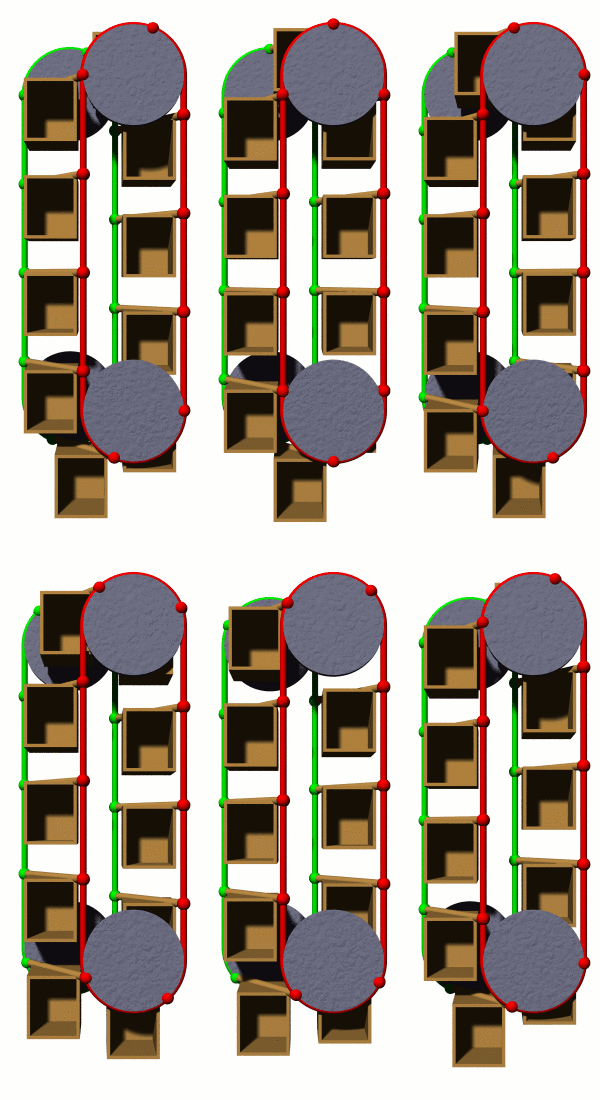
Or, rather, the contraption they called the Paternoster. The Paternoster is a chain of open compartments that move in a loop, one side ascending, the other descending. No buttons. No doors. You step in while it's moving, then hop out when you reach your floor. No stopping. No slowing down. It looked like a relic from a time before health and safety regulations. I watched one go around, a student stepping in as if it was nothing. I wasn't sure if it was genius or madness. I recently learned that they're still in use in some buildings. There's even an official warning telling people not to ride "over the top" or "under the bottom". Not because it'll kill you, apparently, but because it might break the thing and leave you trapped inside until someone comes to get you. Sounds about right.
There was also the question of how to pay for it all. I think it was my mum who first suggested applying for a sponsorship. She’d spotted a posting in the Barnsley Chronicle newspaper from the National Coal Board and handed it to me, probably with a bit of encouragement along the lines of “worth a try.” So I applied.
The NCB wasn’t a board in the usual sense. It was the nationalized face of the British coal industry, technically owned by the public and operated by the government. Everything coal-related in the UK fell under that banner.
The application process led to an interview at Grimethorpe Colliery, at the NCB’s Area Headquarters, a place I would come to know well. Getting there meant catching two buses across town. The phrase ‘panel interview’ doesn’t quite do it justice. It felt more like a tribunal. They had arranged themselves along one side of a long, narrow room, maybe five or six blokes in suits lined up behind a desk, though it felt like twice that. I sat alone on the other side, face-to-face with the lead interviewer, but questions came from all directions. My head was bobbing back and forth like I was watching a tennis match.
But I got through it. They offered me a sponsorship on two conditions: that I pass the NCB medical test, and that I actually get accepted into a university program.
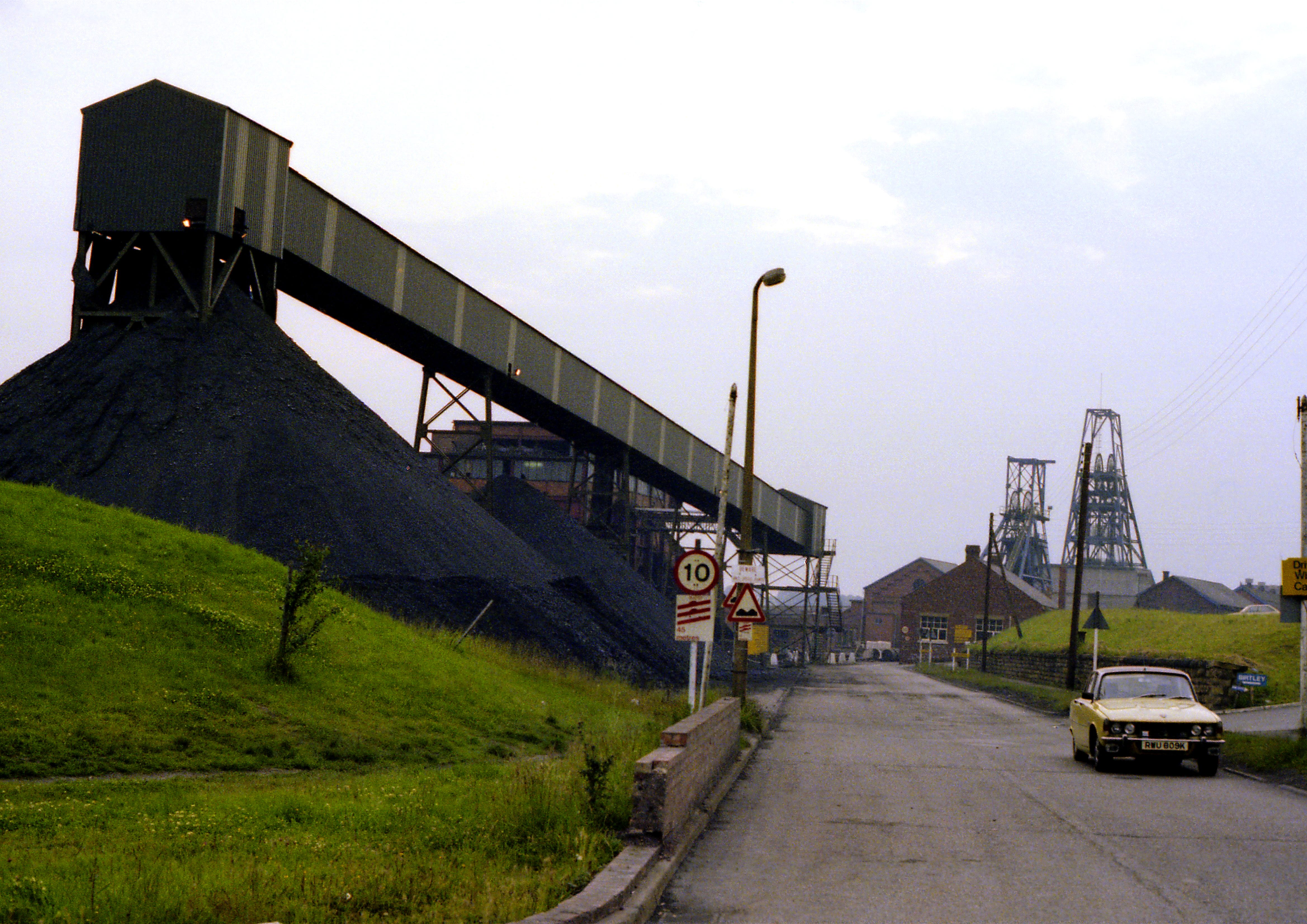
The medical meant another bus, this time to Woolley Colliery. Stepping off, the sheer scale of the place was immediately daunting. The twin pit shafts loomed over the site, surrounded by what seemed like a giant slag heap. Before I even reached the doors, there was an inescapable feeling of filth that seemed to cling to the air and the brickwork.
Inside, the pit medical center was a muddle of disorganized chaos, the waiting room packed with sixteen-year-old lads all facing the pit medical examination for the first time. I felt like a bit of an odd fish; the other lads were all applying for mining jobs, and I was the lone university candidate. I worried they might think I felt superior or that I didn’t belong. In truth, we were just a bunch of nervous boys out of our element in an industrial clinic. I must have passed the medical, which was very brief as I recall.
Both Grimethorpe and Woolley collieries are gone now, wiped from the landscape. To a passerby, only the rehabilitated and landscaped slag heaps give any indication that anything was ever there.
The sponsorship came in two parts. First, there was the financial support, around £700 a year, which topped up my regular student grant from Barnsley Council of £1,500. That totaled about £2,200 a year. It sounds quaint now, but back then, it was enough to live on. Tuition was paid. Rent was covered. We weren’t racking up debt just to get educated.
The second part was paid summer work, underground, in the industry most of my old St Helen’s classmates were destined for, whether they wanted it or not. But that was for later.
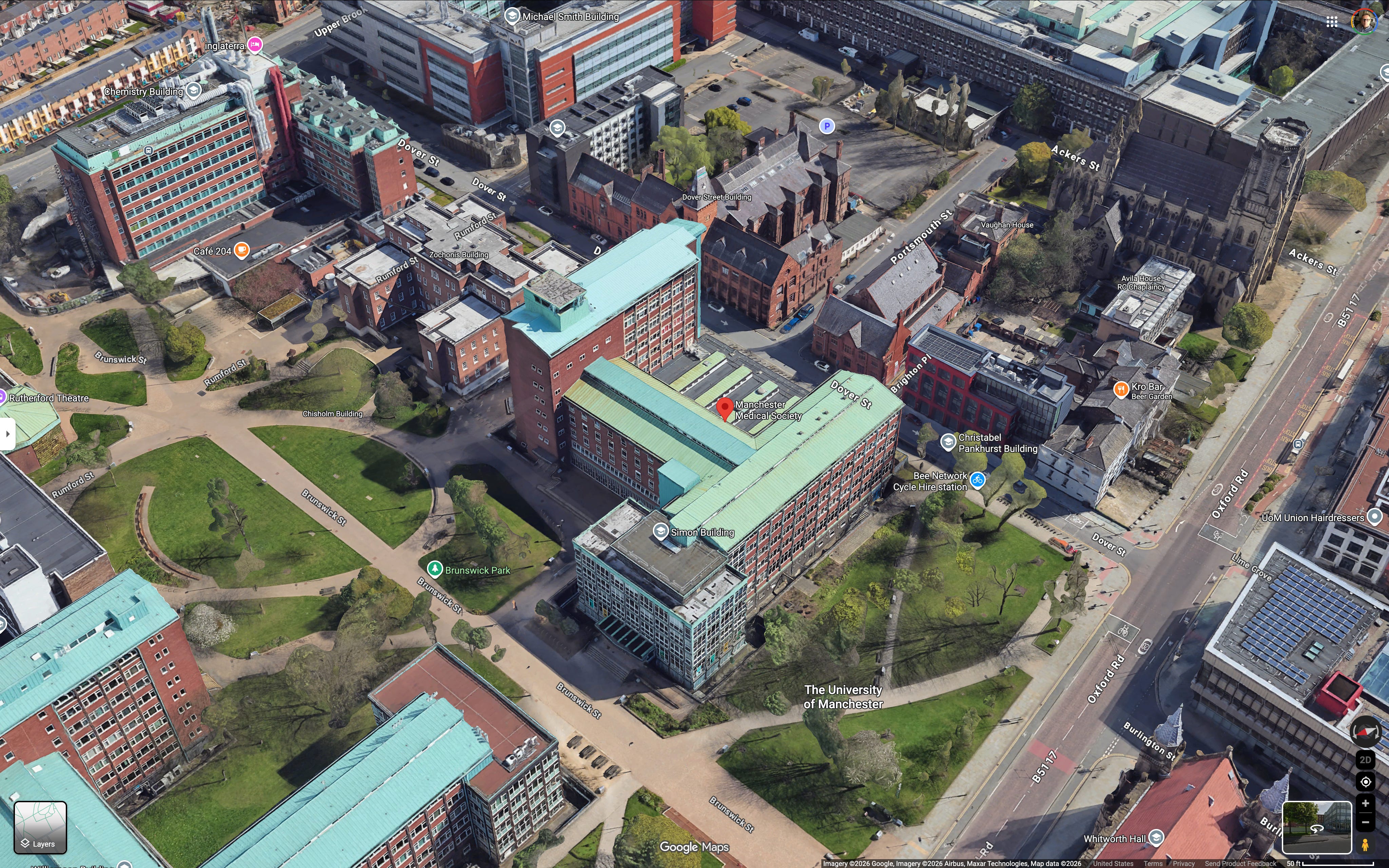
In the end, I didn’t get the grades for Sheffield. My offers were conditional, and I fell just short. It wasn't a disaster, but it did mean Sheffield was off the table. No Paternoster for me. I had the grades for Salford, but Manchester was the better fit, so in the autumn of 1981, I crossed the Pennines to begin a three-year degree course in Electronics and Electrical Engineering at the University of Manchester.
Manchester in the early 80s was still recovering from the back end of industrial decline, with the sort of weather that made you feel it in your bones. The rain was frequent, the buildings worn, and the streets full of characters who looked like they’d seen harder times than I had. But I liked it. There was an energy under the surface, a sense of things shifting.
Looking back, my first year in Manchester felt like being thrown into deep water. The workload was heavy, the material dense, and life away from home was a big adjustment. I lived at Hardy Farm, a student residence in Chorlton-cum-Hardy, in a room about the size of a generous cupboard. It had a desk, a bed, and a large window facing the kitchen in the block opposite. On many nights, you could see me through that window, hunched over my desk, burning the midnight oil as I tried to make sense of circuit diagrams, transistor behavior, and the math behind it all.
I'd come from a fairly sheltered corner of South Yorkshire, and it took a while to realize that my new neighbours came from a much wider spread of the social ladder than I was used to. Comments like “oh, you're from the Socialist Republic of Barnsley,” eventually clued me in.
Hardy Farm was purpose-built in the early 1970s as a student residence with 136 flats. Every ten flats shared a kitchen, three toilets, and one shower. It has since been demolished and, in 2018, redeveloped into 28 “executive” homes overlooking the Chorlton Ees nature reserve and Sale Golf Course, if you believe the brochures. The brochures emphasise the greenery. In our day, the dominant feature was the Barlow Tip, an open landfill that supplied Hardy Farm with a seasonal population of oversized black flies. The tip has since been landscaped into part of the golf course.
Getting to lectures meant catching the 85 or 86 from Chorlton to Oxford Road. Hardy Farm was the terminus, so we had the run of the bus and instinctively headed upstairs. I didn’t smoke, but in 1981, it was still allowed on the top deck, and by the time we reached town, the bus had filled with Mancunian commuters who did. I would arrive at the lecture hall smelling like a chimney.
The core of the course focused on traditional electrical engineering: semiconductors, transformers, power systems, and plenty of theory. I threw myself into the work, letting it consume my time and energy.
One of the modules was a Pascal programming class. We typed code into a green-screen VDU, saved it, submitted the file for execution on a remote system, and waited for the output. That remote system was the university's CDC Cyber supercomputer. Housed in a huge glass-paneled room over in the UMRCC building and attended by its own dedicated staff, it was the kind of imposing technological marvel they undoubtedly used as a showpiece on official university tours. But for us, it was just a waiting game. Rinse and repeat. Some of the smart alecks in the class gave the tutor a hard time, literally heckling him with claims that BASIC was better because, on a microprocessor, you would get instant feedback. I didn’t have a dog in that fight.
Another module focused on Z80 assembly language, which felt like an afterthought on the syllabus. At the time, I was still aiming for a career in electronics, and the Z80 course seemed like just another box to tick. That feeling was underlined by the professor’s habit of telling us how Z80s were in washing machines.
The class used a pair-work setup where each pair shared a Research Machines 380Z computer connected to a Z80 single-board computer. We started by entering machine code through a hex keypad on that board, one byte at a time, just to blink an LED. Eventually, we graduated to writing real code on the 380Z using a text editor and assembler.
I honestly had no idea that the machine now sitting in front of me was likely the same model that had been locked away in Barnsley. I failed to connect the dots between that 380Z, the single-board computer we were using in class, and the new color ZX Spectrum that was just beginning to appear in Sinclair Research ads. They all shared the same Z80 processor, and I certainly did not appreciate then that this class would seed my entire career. At sixteen, the Z80 had been the future I was not allowed to touch. At eighteen, it was just the thing that made washing machines spin. It was a connection that would not bear fruit until much later.
Spring of 1982 was defined by a new vocabulary: Malvinas, Exocet, Goose Green, Belgrano; words repeated nightly on the BBC evening news by Brian Hanrahan. None of us really knew where the islands were, but everyone had an opinion. When the Belgrano was sunk, it felt suddenly serious. I remember wondering, briefly but genuinely, whether this might spiral into something larger. I also remember thinking I already had enough to worry about.
Then I caught chicken pox.
I had somehow avoided it as a child, so when it finally arrived halfway through the first year, fever and rash kept me confined to my room at Hardy Farm for two weeks. I had to rely on classmates I’d known for only a few weeks to pass along word and collect assignments for me. The course did not pause.
It was the first time I’d been properly ill away from home. Independence, it turned out, included fever and laundry.
Still, I made it through. By the end of the first year, I had a working understanding of circuit theory, a pile of textbooks full of underlining and notes, and a dim awareness that maybe, just maybe, programming held more interest for me than resistors and breadboards. I just didn’t know what to do with that yet.
And then it was summer. Time to go underground.
This chapter is the second part of an ongoing series. An evolving list of chapters is available on the contents page.
I used to love hearing you tell these stories, in person. Reading about them, with more detail, is absolutely delightful!