

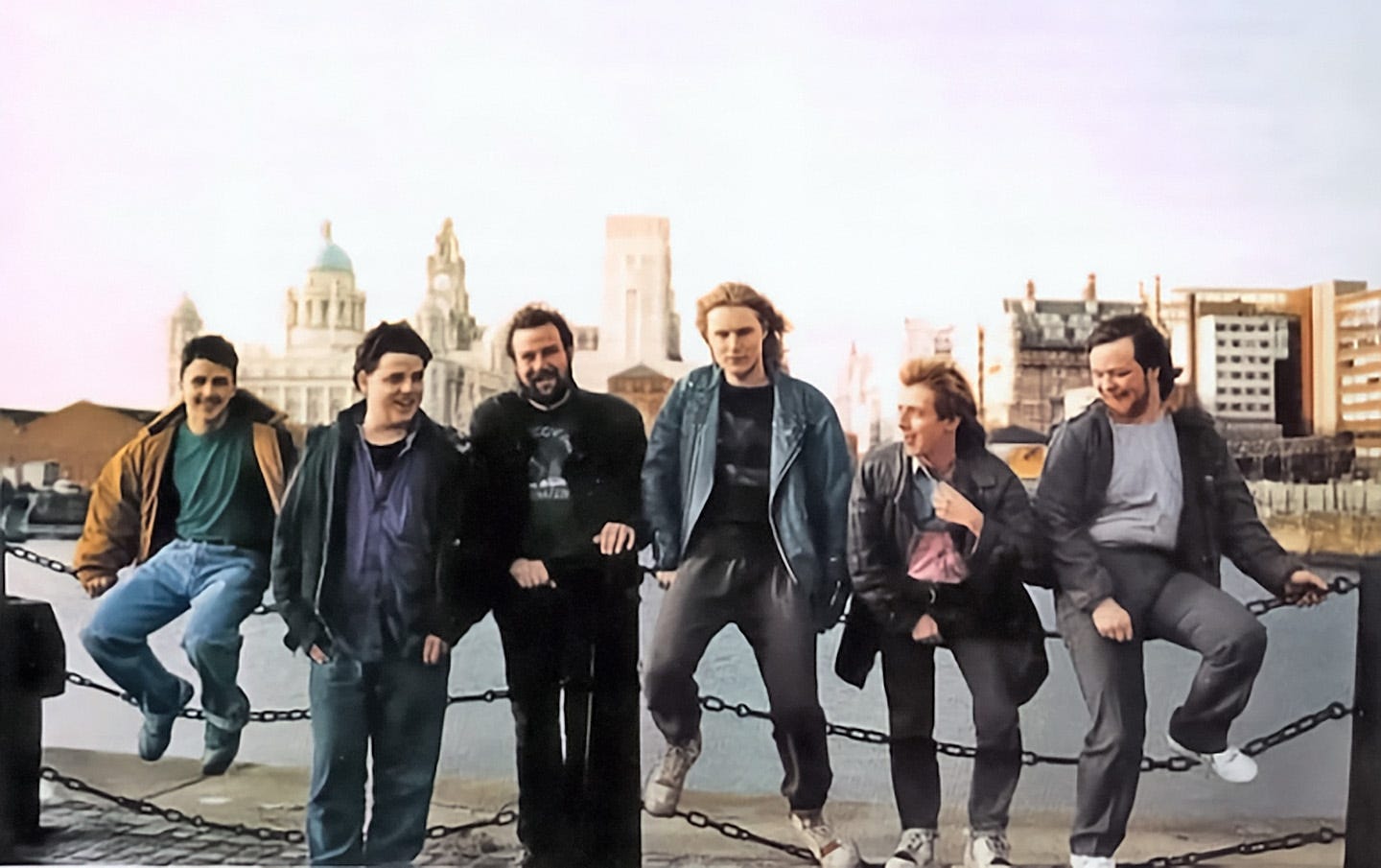
Projectyle was in manufacturing, and excitement and a hopeful air surrounded Eldritch The Cat.
Marc and I had really gone all-in on Projectyle. We ended up with a game that went well beyond the contracted scope and, it must be said, the development schedule. Eldritch absorbed all the overruns. We didn’t blow the budget so much as we endured it. All it really meant was that Marc and I struggled financially to make ends meet throughout Projectyle’s development. We did it willingly, but it was a gamble; our big bet was having an original game, with royalties, published into the global market by Electronic Arts. It was the biggest opportunity we’d ever had.
So we weren’t rolling in royalty-advance cash. At times I could barely afford to eat, and I missed multiple house payments. Foreshadowing.
While we were, of course, very excited to see Projectyle launch, it still very much remained to be seen how it would perform in the market.
So, how did it do? With the benefit of 20/20 hindsight, the answer to that question is nuanced. It did well enough for us to secure another game contract with EA, for a game called FLOPS. More on that later. But it was a full two years between my leaving Denton Designs and Projectyle shipping in the spring of 1990. Even though Projectyle wasn’t signed until December 1988, our £17,000 advance against royalties was my only real income over that 2-year period, and it had to cover more than just my expenses. For the final months of Projectyle, both Marc and I worked on the game full-time.
Here’s the thing: even with the global reach of publishing giant Electronic Arts, Projectyle never earned out. What does that mean? Basically, it meant no royalty checks for Marc and me. And by the numbers, we were on a 12% royalty, so if you guesstimate at £1 per unit, we’d have to sell 17,000 copies worldwide to pay back that £17,000 royalty advance. The game didn’t sell enough to pay it back. Disappointing for an EA game on two formats, to say the least.
We had been told certain things. EA was going to make a big splash, using fluorescent ink on the packaging to make the box really stand out on the shelves. But at some point, they quietly withdrew the plan. Too expensive? I don’t know. We ended up with a pinkish box.
We were told that supporting an expansion disk was now a required feature, so we shouldered the additional ask and implemented a system to support an add-on disk, should it become available. This never came to pass; no expansion disk was ever commissioned.
And we were teased with a Sega Genesis version. EA was huge on the Genesis, and Trip Hawkins was really interested in Projectyle and was a big supporter of making a Genesis version, so we were told. Not by Trip, it must be said. And all of this quietly went away, too.
I am sure all of these tales were told in good faith; there’s no indication otherwise. But business realities change. Maybe the magazines weren’t hot enough on the game. Or maybe the distributors were cool.
All I know is that it didn't earn out, and we didn't see even one wrinkled, torn pound note in royalties. Not a single bent pound coin. Nowt.
And the game itself? I think Marc and I did a good job. We were covering a lot of bases ourselves, and honestly that probably meant the quality of some of the audiovisual elements was a little uneven. And the gameplay? One thing I have never been 100% happy about is player aiming: the way your aim trailed or led the target could take a little getting used to. This was never specifically called out in development, QA, or QC, but it has always nagged at me. Was this a reason why the game didn’t earn out? Maybe with fewer distractions, a bit less wannashoulda both on and off project, this was something that could have been improved. I will say that in the Air Hockey mobile game I did for EA/Jamdat in 2006, I finally solved ‘aiming’; if I ever update Projectyle, I know exactly what to do.
None of which is to say that EA didn’t make at least some money on the game. They were on the 88% side of the royalty equation, after all. And if I sound a little bitter, generally I am not, because this is not something I often dwell upon. But I must admit to a little twitch in the corner of my eye when I do think about it.
I do find it curious how many people have heard of Projectyle, and I’ve heard more than one comparison between Projectyle and Psyonix's Rocket League. I suppose a game can be influential without being commercially successful.
But back in the spring of 1990, we were not thinking about any of that. And things were afoot at Eldritch.
Rewind a month or two, and you’d find Marc and me paying a visit to the Brunswick Dock to visit one Mark McCubbin. We’d first met Mark the previous year when he was at Denton Designs and looking for new work. He’d visited the Eldritch office (my house in Croxteth Park) and worked on some graphics tech for a demo. Now, he was independent from Dentons and working on a contract for Psygnosis to port Shadow of the Beast from the Amiga to the Atari ST. And he was sharing this tiny space with another ex-Odin reprobate, Stefan Walker (of the upside-down Astro Charlie). Stef was working on Chuck Yeager’s Advanced Flight Trainer for EA.
They were in a tiny office, but in the vast 1980s Liverpool Docklands redevelopment, there was other adjacent office space. And our ‘big game’, Projectyle, was about to ship, and…
To cut a long story short, we collectively made a big decision. Marc Wilding and I would move out of my house in Croxteth Park, into a new office space shared with Mark McCubbin and Stefan Walker, who would both come on as directors of newly incorporated Eldritch The Cat, Ltd. And there was room in the office for a few more people.
And so it came to be that Eldritch The Cat moved out of my house to a new office, a windowless room (with a glass roof for natural light) in an otherwise decent building that was once an ancillary part of Brunswick Dock: Century Building Section 5, Brunswick Business Park, Tower Street, Brunswick Dock, Liverpool 3.
We had two contracts with EA (Projectyle and AFT) and a contract with Psygnosis (Shadow of the Beast), who were just next door! It felt like things were starting to line up for us.
Fast forward to Projectyle's completion, and with Eldritch in our new digs, we needed new games. The first was our follow-up project with EA for a game called “The Free League of Pathetic Superheroes.” Sometimes referred to as the Futile League of Pathetic Superheroes. Mostly known by the acronym FLOPS. We had signed FLOPS with EA for the princely sum of £24,000, and we were to design and implement versions of FLOPS for Atari ST and Commodore Amiga. Naturally, we were to produce all art and audio for the game, in addition to design and code.
This was primarily to be my game, and I made good progress organizing the Projectyle code into reusable libraries and getting my newly acquired PC-based SNASM development systems up and running.
In the game, players encountered a variety of uniquely named superheroes leaning into classic superhero taglines like “Clark Kent is Superman” or “Peter Parker is Spiderman,” viz “Koi Carp is The Goldfish,” with the power to transform into a goldfish. Suitably pathetic, you might agree. Another pair of characters was the Hobby Horse knights: the White Knight and his adversary, the Black Knight. Alas, I can’t remember many other characters, though we had a whole ensemble.
Martin Calvert, a supremely talented artist and one of our first employees, brought the game’s world to life with art rivaling the best 16-bit 2D pixel art of contemporary games. His contributions included a stunning FLOPS logo, a pixel art masterpiece featuring chrome lettering set against a desert scene under a blue sky, as well as all in-game sprites and backgrounds, the vending machines, etc.
The game’s setting drew inspiration from 1950s, 60s, and 70s Americana, presenting a big city with vertically scrolling sections where players could explore various buildings and encounter passing vehicles, all intricately designed by Martin.
Gameplay was diversified through minigames, some fully implemented with complete graphics and others partially. A notable minigame involved the Hobby Horse Knight encounter, which transported players to a simplified chessboard. Here, the Black Knight played against the White Knight, moving in a chess knight “L” pattern on a board where each square gradually decayed to reveal bubbling lava and death below! In another minigame, The Goldfish would attempt to escape a goldfish bowl by building momentum, California Games style; we were big fans of California Games on the Atari Lynx.
The game featured vending machines dispensing potted (à la Pot Noodle) superheroes and a claw machine minigame that let players pick up items.
The game’s development hinged on the proprietary OCCAI framework, a collaborative effort primarily led by Mark McCubbin. OCCAI, named for its playful nod to Scottish dialect, included a sprite animation system, a custom scripting language for game logic, and collision detection.
Quite early on, PC programmer Dave Collins joined the Eldritch staff, and we contracted with System 3 for the PC version of Last Ninja 3. Dave had just ported the game Stormlord to the PC, so picking up another port, which could be done by one person, seemed to make a lot of sense.
In hindsight, we were about to make a few decisions that would determine the fate of Eldritch. Here we were, a team of coders well-versed in 68K assembly language; why didn’t we bolster our coffers with some easy ports? Atari ST to Amiga or vice versa, we figured that we could take on one or two of these. Mark made a few phone calls, and it turned out that he was pretty good at getting publishers’ attention.
So we gathered one day in our glass-roofed office, waiting for the door to open and herald the arrival of Frederic, a producer from French publisher Titus, who was in the UK meeting with developers. Early fruit from Mark’s efforts on the phone.
Frederic was a quiet guy, and I can say with certainty that his English was much better than our French, but I did not go so far as to say it was good! Anyway, we must have communicated well enough to convince Frederic that we were the right team to do an Amiga port of the Atari ST game Titus was publishing called “Crime Does Not Pay” (“Le Crime Ne Paie Pas” in the original French). Titus was offering a decent amount of money. I don’t recall specifics, but it was worth a good chunk of money, especially compared to what EA had paid us for Projectyle, which was eye-opening.
So we had more discussions; we signed a contract, and Titus would provide the source code for the Atari ST version.
Late one evening, we unhooked our fax machine and hooked up our modem to the fax line. We were on a voice call with Frederic, coordinating the file transfer protocol we’d use: YMODEM, ZMODEM, etc. Frederic started sending files, but something was wrong, and our respective modem packages weren't communicating correctly. Instead of writing the source to disk, our modem package was streaming it to the screen, and we could see line after line of code scrolling up the screen. As I looked at this source code, I felt a sudden tightening in my chest. I looked over at Mark; he had noticed, too.
The source code was in the C programming language.
Double-u Tee Eff?! We had assumed it would be in 68K assembler. Nobody at Eldritch knew C! Well, crap. So much for a quick port! Time to learn C!
I volunteered to learn C while doing the port, an unexpected time sink and a big distraction from my work on FLOPS. I don’t remember how it made sense for me to volunteer for this. Maybe I felt guilty about getting us into this predicament. Using a copy of Borland Turbo C with its handy interactive help system and a copy of the K&R book, I taught myself how to program in C. I struggled through the Atari ST code for Crime, trying to figure out how to make it work on the Amiga, but I ran into problems. I couldn't find parts of the game in the ST source code, and I couldn't build the ST version. We reported this to Titus, who eventually said, “OK, you must be doing something wrong; here’s the phone number for the Atari ST developer in France.” We learned two things after talking on the phone to this French fellow (I am sorry, I don't remember his name): first, he confirmed that the source code was indeed incomplete. Second, after asking the obvious question, we learned that Titus still hadn't paid the developer, who was withholding the final code until they did. Yikes. Forewarned is forearmed, they say.
Eventually, they provided the complete source code, and progress on our side was pretty good once I had the buildable source code. But Titus was terrible at paying and knew all the tricks to delay paying developers. For example, our bank advised us to insist on payment in pounds sterling, but Titus failed to agree to a wire transfer, so we settled on what we naively thought was a decent compromise: Titus would send us a check payable in sterling. When we tried to deposit the check, we asked the bank clerk how long it would take to clear. The clerk told us it would take several weeks to clear since it was written in sterling against a French bank and, therefore, was a “negotiable instrument.”
This became par for the course; Titus would find one reason or another to delay each payment. At some point, Louie Beatty (whom I would encounter again later at Virgin Interactive) stepped in to replace Frederic. Despite the chaos and Titus's cowboy publisher shenanigans, we delivered the completed game. We got out alive, a little bruised and wiser, but we did eventually get paid.
In our quest to swell the Eldritch coffers, we took on another port for System 3, the Amiga-to-Atari ST port of Flimbo’s Quest. This game was in 68K assembler, and Marc quickly ported it from the Amiga to the ST, using Mark’s Shadow of the Beast scrolling and my Projectyle sprite tech. I also interpreted the Amiga music for the ST, which was one of the distractions I took on. This was less wannashoulda and more paying the bills.
We encountered a few new payment-delay tactics while working with System 3. A good one was, “Somebody stole our company checkbook, so we had to cancel that check we sent you. Don’t use that check; we’ll get you a new one soon.” We got paid in the end; it was our honor to provide a credit facility at the Bank of Eldritch.
Some reviewers disliked the 8-pixel scrolling we’d implemented, but System 3 liked the game and offered us more ports (and, oddly enough, more music work), and when programmer Dave Colclough from Denton Designs became available, we brought him on staff too and lined up the Amiga and Atari ST versions of Myth: History in the Making.
Rounding out the Eldritch team was Jimmy Savage, who joined us on a youth training scheme with a keen interest in graphics. Jimmy proved to be a great addition to the team, creating art for a number of prototypes and games, mostly working with Mark McCubbin.
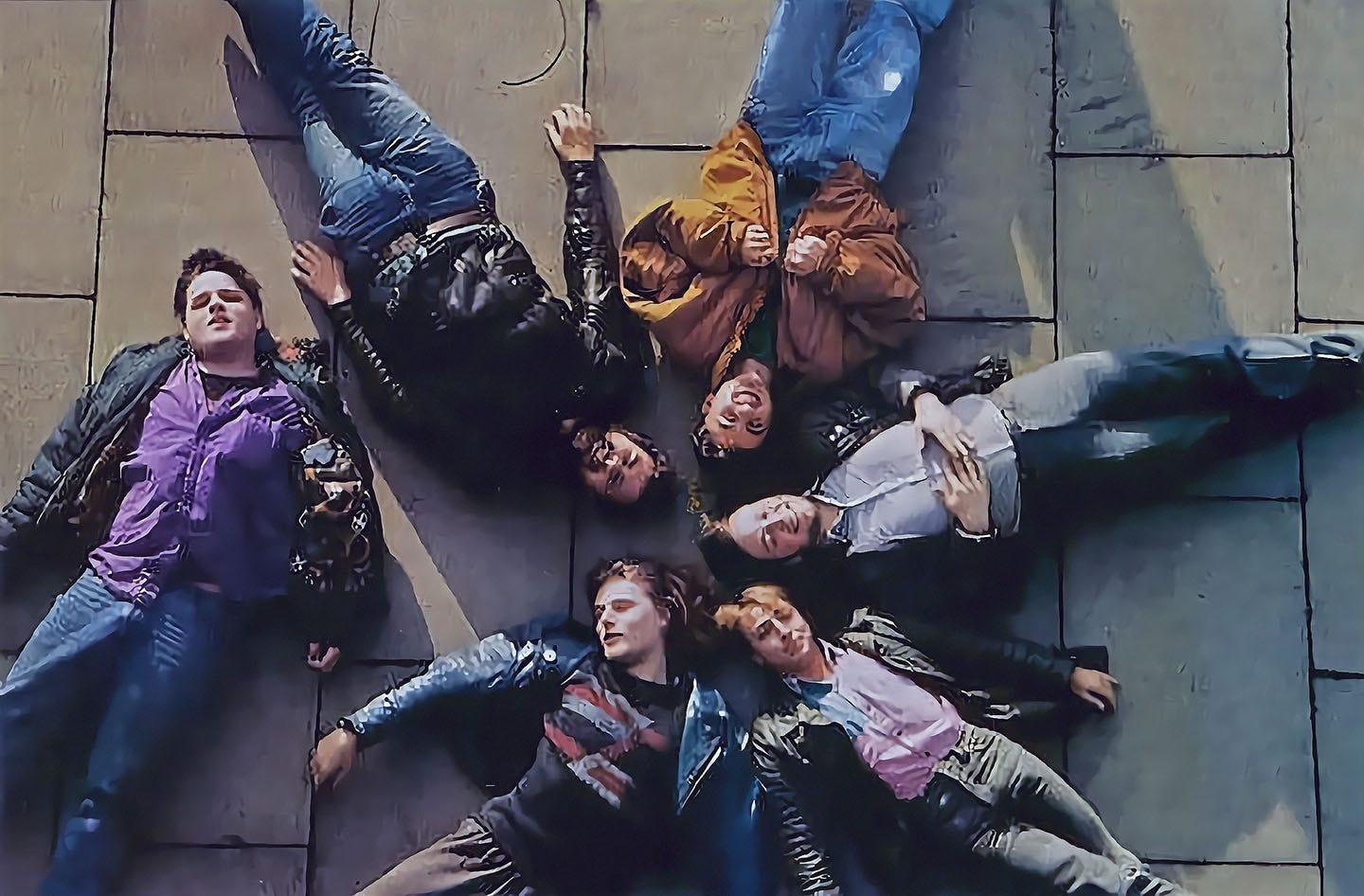
In the fall of 1990, with Shadow of the Beast for the ST and Chuck Yeager’s AFT both wrapping, Eldritch was again in need of more new original titles.
Unfortunately, my Eldritch co-founder Marc Wilding decided to part ways with the company to look for more stable and less financially ‘exciting’ work. We’d treated Projectyle as a royalty bet, but influential or not, it had turned out to be more like a low-paying work-for-hire job.
Stefan left soon after, and it was down to Mark McCubbin and me to figure out what came next.
This chapter is the fifteenth part of an ongoing series. An evolving list of chapters is available on the contents page.
Spent two weeks with Eldritch the Cat doing some graphical something or another for the Last Ninja game in that windowless office. Up from London staying in the cheapest B&B Cale could find, it was my first time North of the M4. Although I'm hazy on what I did or who I exactly met, I do remember a new Mac Lads album was the flavour of the month and it was a great laugh being there.