

“Hey Colin, let’s take a day off from Dentons and jump on a train to London.”
That, more or less, was how I put it to Colin Grunes. So we did exactly that, ditching work at Denton Designs for a day. We took the train down from Lime Street to Euston, then the tube over to the Telecomsoft office on New Oxford Street to clear up the Crosswize situation.
Crosswize was late. It was meant to be finished in time for a Christmas 1987 release, but here we were in January 1988, and it wasn’t done. Not quite. It needed to be, and for more than one reason. For one thing, I needed the final payment from Telecomsoft. I was running on fumes, financially. For another, Colin and I had started work at Denton Designs that same January, which meant I was working double time, trying to wrap Crosswize at night and be fully present for the new job during the day.
I had poured everything into Crosswize. I had tried to make something special, and the systems I built to deliver the smooth graphics and the fast action were, on a purely technical level, the best work I had ever done. That came at a price. The ridiculous number of hours I had spent at the keyboard, eking out a little more performance and then a little more, was exactly what had made the game late. My own fault for overstretching myself. This was my first gig as an independent developer, and the deal we had with Telecomsoft was a £10,000 advance: £5,000 on signing and the rest on final delivery. Colin and I split it 50/50. For the latter part of 1987, that £2,500 was my sole income, and given that I had spent the first part of that year finishing Sidewize unpaid as Odin wound down, my situation was dire.
With 20/20 hindsight, it is obvious that instead of trying to push the boundaries of what was possible on a Sinclair Spectrum, I should have done a light reskin of Sidewize and been done with it. Water under ancient bridges now, of course.
Telecomsoft were not best pleased. Once inside their office, we started off chatting with our producer, Tony Beckwith, who was friendly enough. He did say one strange thing, though. He suggested that I was the programmer on the Denton Designs game Eco, which I was not; another Dentons programmer, Colin Parrot, was the developer. I didn’t understand why he thought that. After a while, Tony told us his boss wanted a word, and we were ushered into the office of a stern fellow I had never met and whose name I have long since forgotten. He was evidently the one calling the shots.
He didn’t mess about.
“You’re taking money from us for Crosswize, which is late, but you’re working for Denton Designs. You’re in breach of contract.”
Flustered, embarrassed about the state of my finances, and feeling backed into a corner, I gave a reply that was not quite truthful. “We’re talking to Denton Designs about working for them after Crosswize is done.”
“I’ve just spoken to Ally Noble and John Heap at Denton Designs, and they tell me you’re already working for them.”
Well, shit.
I stumbled through something about how Dentons had probably just wanted to make it sound as though we had already joined the team. It was a feeble thing to say, and nobody in the room was fooled, least of all me.
To cut a long story short, Colin and I walked out of that meeting feeling thoroughly bollocked, with a £2,000 penalty docked from our final Crosswize payment for late delivery. Two thousand pounds! And we still had to deliver the game. I felt particularly bad for Colin, whose part of the work had been finished months earlier.
Looking back, I think the Eco remark was the key to it. Somehow, Telecomsoft had me down as a Dentons man of long standing, someone who had been there long enough to program one of their games while taking Firebird's money the whole time. That would go a fair way to explaining the hostility across that desk. Why they believed it, I never did find out. It’s also possible that Tony’s boss was just having a bad day.
There is another thing I understand now that I did not then. The contract with Firebird, Telecomsoft’s publishing label, was not exclusive. It committed me to finish Crosswize and said nothing whatever about how I spent the rest of my time. They had every right to be angry that the game was late, but working for Dentons was not itself a breach. The advance was gone, I would not be paid again until I delivered, and I needed a job so I could eat. Green, guilty about the delay and rattled, I let them put me on the defensive. What else I had going on was, frankly, none of their business, but I never once thought to say so.
On top of all this nonsense, we still had to face Ally and John back at Dentons, who had been surprised to learn, amongst other things, that Colin and I were in London that day! Thankfully, they were, at least outwardly, cool about the situation.
So I went back to Liverpool, back to a new job I had barely started, and back to grinding Crosswize toward a finish line it had been refusing to cross, juggling that work with my Denton Designs responsibilities.
Not the most auspicious beginning to my time at Dentons.
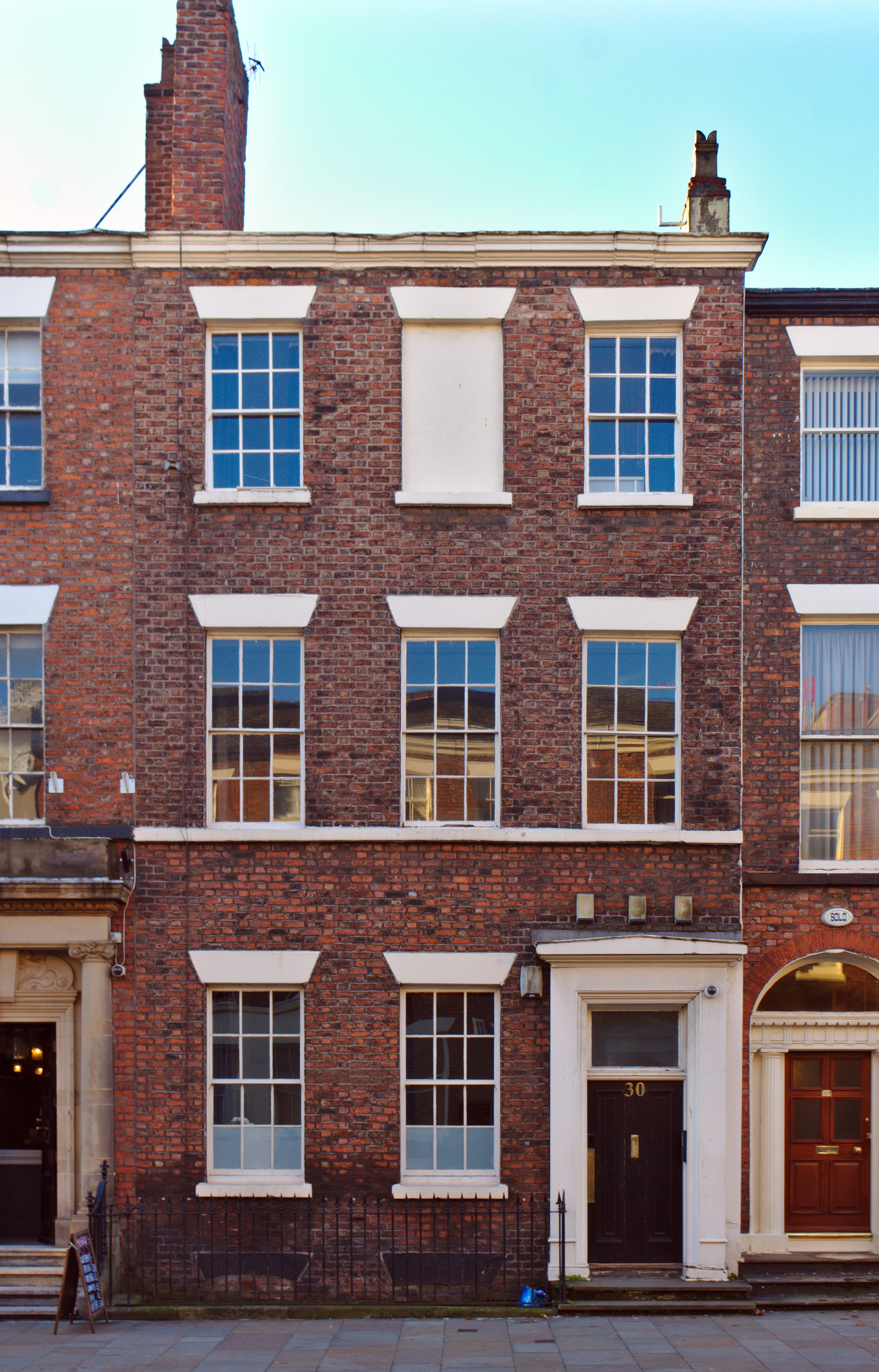
Denton Designs sat on Rodney Street in Liverpool, right next to the Midland Bank. It had been founded by a group of ex-Imagine people, and when I started, John Heap, Ally Noble, and Dave Colclough were running the business day to day. Between them, they had delivered some genuinely great titles, including Gift from the Gods, Frankie Goes to Hollywood, and The Great Escape. Their main project at the time was Where Time Stood Still, a much larger, 128K-only spiritual successor to The Great Escape, with John doing the programming. Dave was also a programmer, working on the 16-bit versions of Eye of Horus at the time, while Ally was an artist. I had a lot of respect for what they had accomplished.
I wasn’t quite among strangers, either. Two familiar faces were already there when Colin and I started: artists Stoo Fotheringham, from the Software Projects and Odin days, and Paul Salmon, who’d done the art on Robin of the Wood while I wrote the code.
I had been hired as a programmer to build an original 68000 game for the Amiga or ST, though nobody had decided yet what the game would actually be. So some brainstorming ensued. We talked through various ideas and settled on a shoot-em-up themed around Greek mythology. The working title was Gargantuan. It was to run over several levels, each one paralleling a specific labor of Hercules, but with a spaceship theme bolted on top. I volunteered for the design as well as the technology. Xenon by the Bitmap Brothers had just come out, and I remember thinking: It’s just a vertical scroller; we can do better than that!
We developed the game on the Atari ST, which was winning out over the Amiga in UK sales at the time. With my partner in crime, Colin Grunes, I worked to flesh out the design while I got to grips with the ST, which was a dream to work on. With no clever custom graphics hardware to get in the way, and only a stock, 8-bit-era PSG for sound, it felt a lot like the Spectrum: a bitmap screen, a bunch of memory, go!
I built the graphics system to handle the multi-directional scrolling the game needed, pulling my Spectrum techniques across into 68000 assembler, and despite the lingering chaos of Crosswize, I was productive through those first months. The high point of that stretch was a self-running demo in which an ST booted from the demo floppy and cycled endlessly through the scrolling levels, loading graphics, scrolling them, loading the next set. The prospective publisher later phoned Ally to say they had left the demo running and it had burned out the disk drive in their Atari ST. Ally and the others then asked me to check that my code was reading the disk correctly, which left me wondering how, exactly, one might read a disk incorrectly.
Once the basic graphics tech was written, I ran out of steam. Not the ordinary sort you sleep off. I would sit down at the machine in the morning, look at what still needed doing, and find I had nothing left to do it with. My one real break in years, that fortnight in the States the autumn before, already felt like another life, and I had not properly stopped since. It was catching up with me.
It was not only the exhaustion. At Odin, I had felt completely in tune with what we were trying to do, comfortable with my role and with the direction of the games. I never found quite the same fit at Dentons. There was nothing obviously wrong, but somehow the work, the company, and I never quite gelled.
Despite all that, a short while into my time at Dentons, with both Crosswize and Gargantuan still ongoing, the idea came up of doing another Spectrum game on the side. I should be clear that this was a Dentons project, not me freelancing behind their backs. Honestly, I did it for the money. The additional £5,000 I was offered made it seem like a no-brainer, and I will admit no great quantity of brain was involved when I blundered into the arrangement. I needed to eat and pay bills; even with a regular salary from Dentons, I was cash flow negative. What was I to do?
So Foxx Fights Back was spawned. The idea was that the poor, persecuted fox, armed with a gun, would take a stand and fight back against the hunters, or the dogs, or somesuch. It was a side-scroller, an iteration of the Crosswize tech, and I built a neat editor so Paul Salmon could assemble maps with the shifted-block scrolling system. That tool earned its keep because the shifted-block business was difficult to explain, and the editor let an artist just experiment with it. I believe Foxx was one of the last games Paul ever worked on before he left the industry.
Before long, John and Ally wanted proof that Foxx was actually moving and set me a deadline to show them something. Here is how I spent those nights. Foxx was a Dentons project, built on one of their Z80 development kits: a Sage IV, a CP/M-68K machine left over from the Imagine days. Its assembler came with a slick little preprocessor one of the Dentons programmers had written. I had never used a preprocessor before, and I fell for it completely. So, with a deadline bearing down on me to produce something a player could see, I set about porting the entire Crosswize source across to that toolchain. It cost me a great deal of time and produced almost nothing that a player could see. The Crosswize habit all over again.
And here is the part I can least defend. Having shifted the Crosswize source onto the Sage IV for Foxx, I then went ahead and built the final shipping version of Crosswize on it as well. It was built with a toolchain I had swapped in for reasons no player could ever see or feel. It cost me nights I did not have and saved precisely no one anything, but the code was already sitting right there, so why not‽
And this was only one of three games I was keeping alive at once: Crosswize still dragging toward its finish, Gargantuan stalled, Foxx due. I was burning the candle at both ends and the middle.
Eventually, I delivered Crosswize to Telecomsoft. It shipped to little fanfare, though the reviews were pretty good, as I recall. I never did hear any sales figures, and if there were royalties to be earned under my agreement with Firebird, I never saw a penny.
Though I could not have known it then, tying the whole of Crosswize to a machine I did not own would come back to bite me in a small way a few years later.
During all this multiple-product mayhem, my jet-black cat Eldritch, named, inevitably, after the same goth frontman as the Heartland wizard, developed a nasty-looking swollen eye, and I was worried about him. I was in the perpetually poor financial state that seemed to define that whole period, and I was without transport, since I still hadn’t learned to drive and could not have afforded a vehicle if I had. So I had to think carefully about how to handle it. I decided to blow the £50 I had to my name on a cab to take Eldritch and me to the vet, reckoning it would just cover the fare and the fee.
I didn’t own a cat carrier. Getting an unwilling cat into a taxi can provoke contortions you would not believe a cat capable of, and cats come fitted with claws: human-flesh-ripping, hot-knife-through-butter claws, especially when they are trying to climb up your back in a bid for freedom. And I was doing this for his own good. Perhaps his cat friends had warned him about the other sorts of procedures that happen to male cats at veterinary clinics.
We got ourselves into the taxi in the end and made our way to the surgery. On arrival, I paid the driver, took a firm grip of Eldritch, and gingerly opened the cab door. Not firm enough. After inflicting a couple more claw-induced gashes in soft human flesh, the cat bastard made his break, vanishing off across the field behind the vet’s and into the twilight. Cats don’t answer to their names at the best of times, and I felt thoroughly foolish roaming the dark field behind Alder Hey Hospital shouting “ELDRITCH! ELDRITCH!” like some cross between Bruce Forsyth and Ozzy Osbourne. I never saw him again, despite a long search.
After a few months at Dentons, I concluded that the job wasn’t for me. Ally and John reached the same conclusion, and in April I was fired. They drove out to my house in Croxteth Park to have me sign a termination letter, a candid account of where I had fallen short. What stuck with me, more than anything the letter actually said, was that somewhere in their list of my failings, they had misspelled the word “unprofessional.” In a letter making more or less that charge, the slip struck me as quietly ironic. I felt terrible for letting them down. All the same, the move was in everyone’s long-term interests. At the time, I took it as a plain failure. It was years before I had the word for it: burnout. I had been going more or less flat out since my job at Software Projects, four years earlier. Over the previous eighteen months, I’d finished Sidewize unpaid while Odin folded, rolled straight into Crosswize, then taken on Gargantuan and Foxx on top of it, and I never once stopped to ask whether I could keep it up. Knowing when to stop was the part of the trade I hadn’t learned yet.
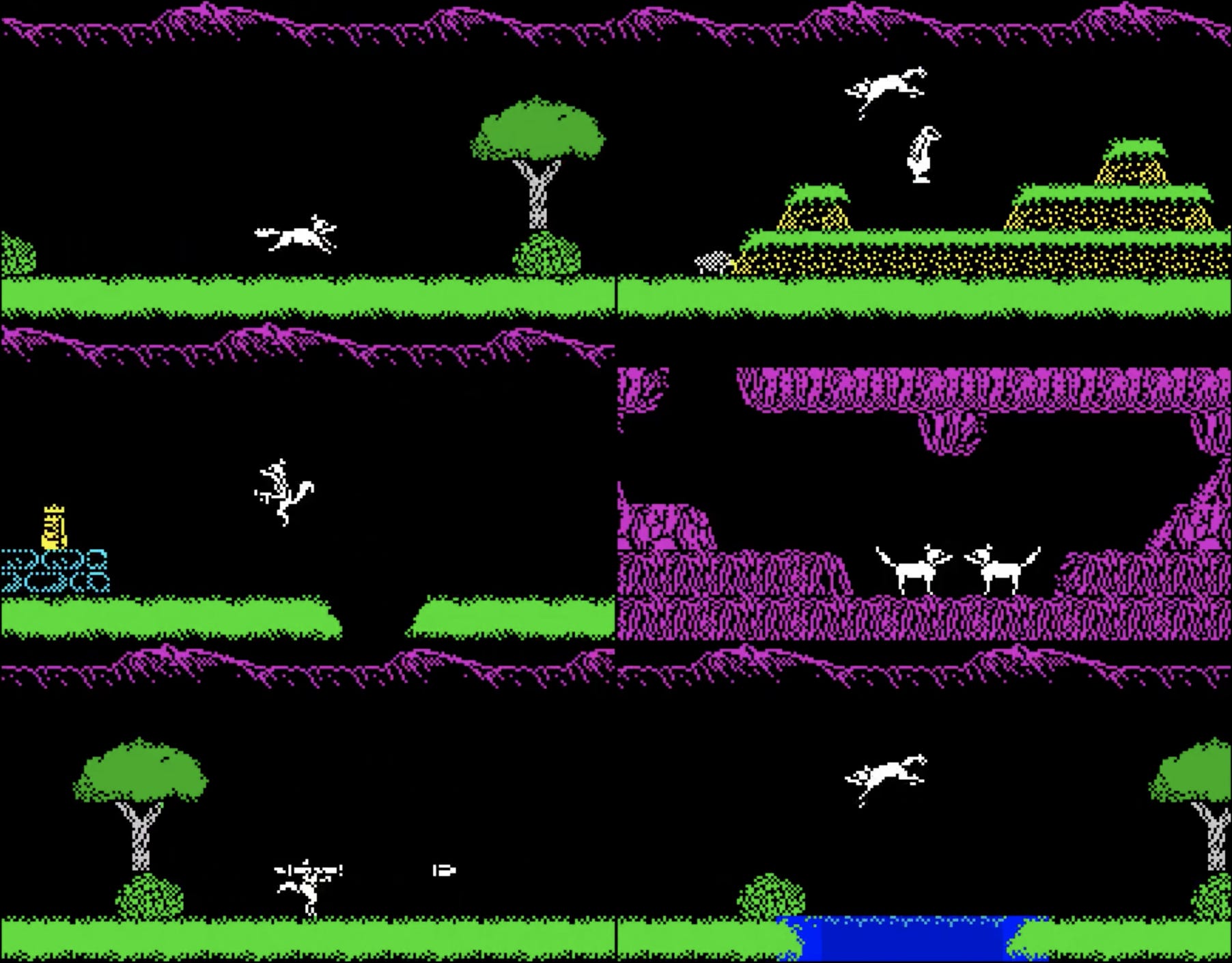
Gargantuan was shelved. Foxx Fights Back did make it to completion, with John finishing the title. My time at Dentons was also the last time Colin Grunes and I worked together in earnest; he left the games industry not long after.
Marc Wilding, then known as Marc Dawson, and I had worked together at Software Projects and Odin, and for a while, we had been tossing around the idea of forming a company. Over a beer in the Mardi Gras club in Liverpool, with me newly unemployed and Marc wrapping up his work on Army Moves for Ocean, we decided to give it a shot.
We called ourselves Eldritch The Cat, after the cat, Eldritch. The cat.
Chapter 13: The Computer, the Costa Brava, and the Contract

After Odin folded, Marc Wilding, whom I’d known since the Software Projects days, did not stand still. With Army Moves wrapped for Ocean, he went a step further and successfully pitched Hewson Consultants on an original game, Astaroth, for the Atari ST and the Amiga.
This chapter is the twelfth part of an ongoing series. An evolving list of chapters is available on the contents page.
Image credits: the social image is a composite. 30 Rodney Street, Liverpool, photograph by Phil Nash, CC BY-SA 4.0; black cat photograph by Damace, CC BY-SA 3.0; both cropped, via Wikimedia Commons. Center image, the author's own.
Did that demo of Gargantuan ever surface like on games that weren’t? Be curious to see what it looked like.